Table of Contents
As the leaves begin to change and the temperatures drop, it’s the perfect time to give your deck some much-needed attention. Fall deck maintenance plays an important role in preparing your outdoor living space for harsh winter weather. Taking a few preventive steps now can extend the life of your deck, improve its appearance, and reduce the need for costly repairs later on.
Whether your deck is made of natural wood or composite materials, these seasonal maintenance tips will help keep it in optimal condition year-round.
1. Remove Leaves and Debris Regularly
Fallen leaves may create a beautiful fall scene, but they can harm your deck if left to accumulate. Wet leaves trap moisture against the deck surface, creating the perfect environment for mold, mildew, algae, and wood rot.
Use a broom or leaf blower to remove leaves, pine needles, and other debris at least once a week during peak leaf season. Pay close attention to corners, between deck boards, and around stairs where debris tends to collect.
2. Give Your Deck a Thorough Cleaning
Before winter arrives, wash away dirt, pollen, mildew, and stains that have built up over the summer.
For wood decks, you should use a deck cleaner specifically designed for wood. Scrub stubborn stains with a soft-bristle brush and avoid excessive pressure washing, which can damage wood fibers if used improperly. If you want to use a pressure washer, make sure to use only soft wash settings.
For composite decks, follow the manufacturer’s cleaning recommendations. This typically includes using mild soap and water or an approved composite deck cleaner. If food or grease spills, clean up the mess promptly to prevent permanent discoloration.
3. Inspect for Damage
During fall deck maintenance, you should take the time to perform a thorough inspection before snow and ice hide potential problems.
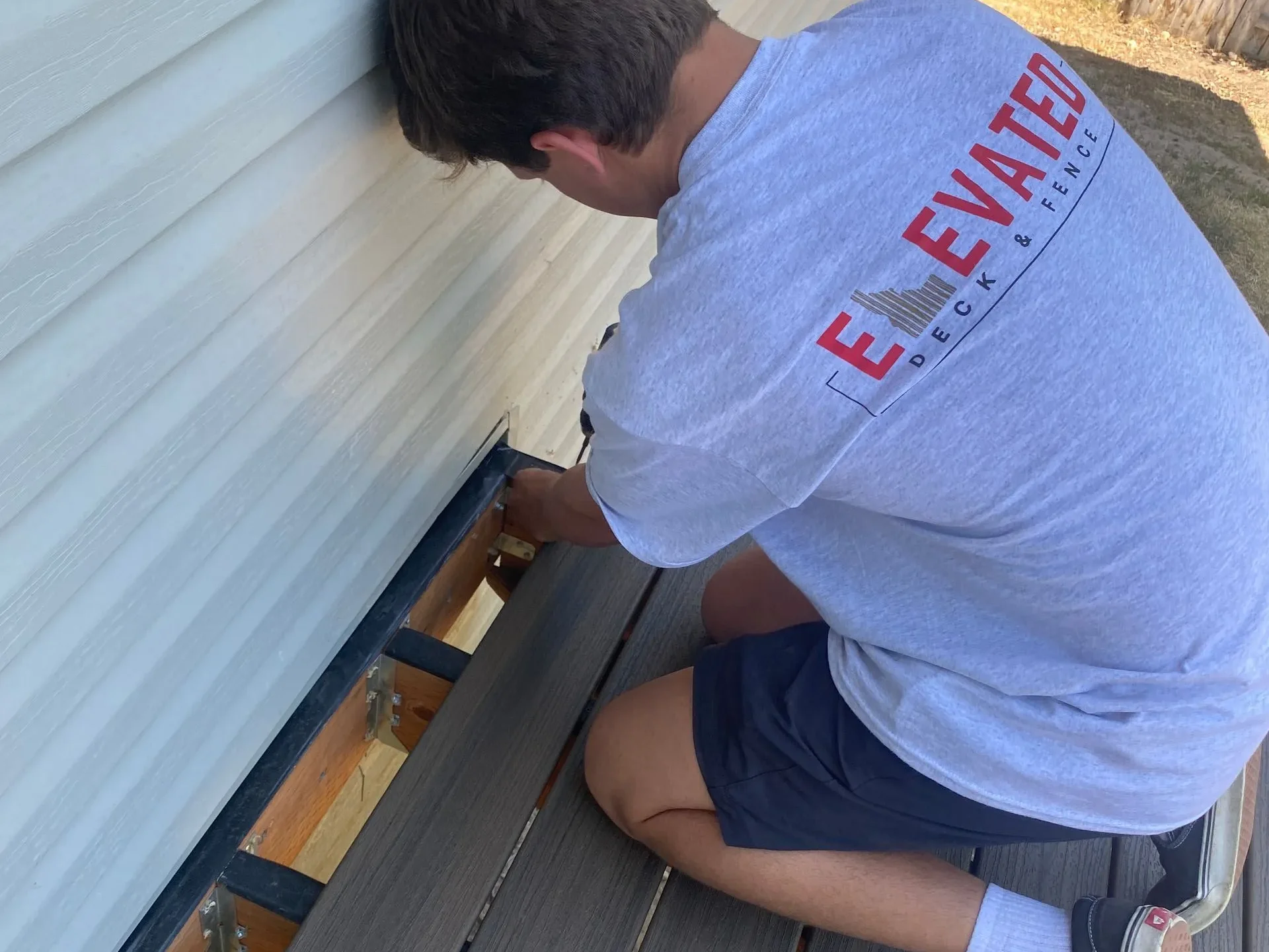
Look for loose or popped nails, missing or damaged screws, cracked or split boards, soft, warped, or rotting wood, loose railings, wobbly stairs, or rusted hardware.
Addressing minor repairs now can prevent larger structural issues in the spring.
4. Check for Signs of Moisture Damage
Moisture poses a big threat to any deck. Inspect areas that receive little sunlight or where water tends to collect and look for mold or mildew growth, discolored wood, soft spots, warping, or standing water after rainfall.
Improving drainage and correcting moisture issues early can significantly extend the lifespan of your deck.
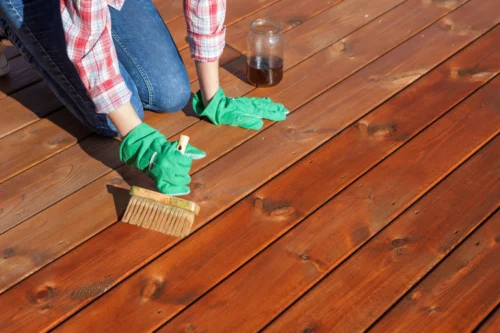
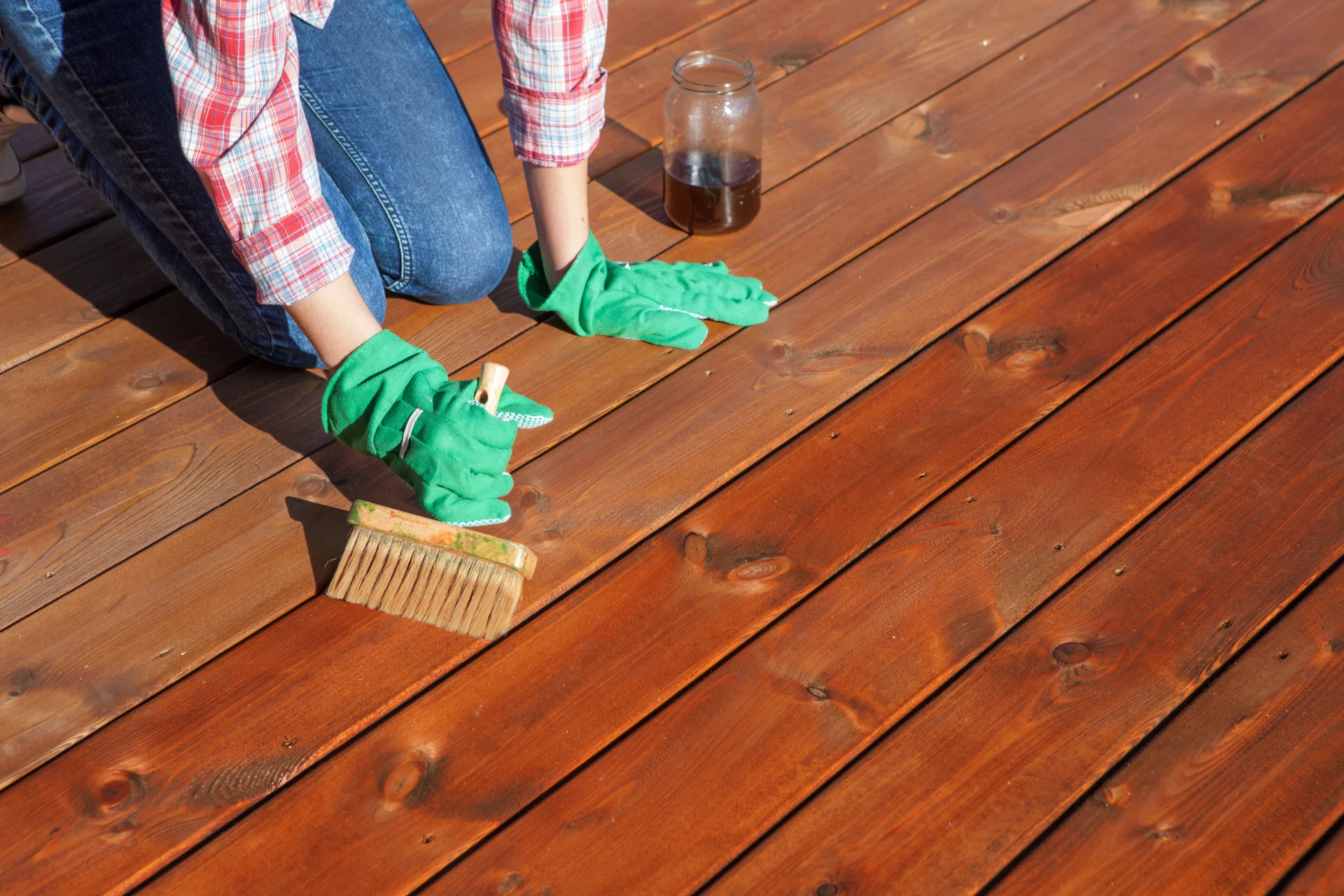
5. Seal or Stain Wood Decks
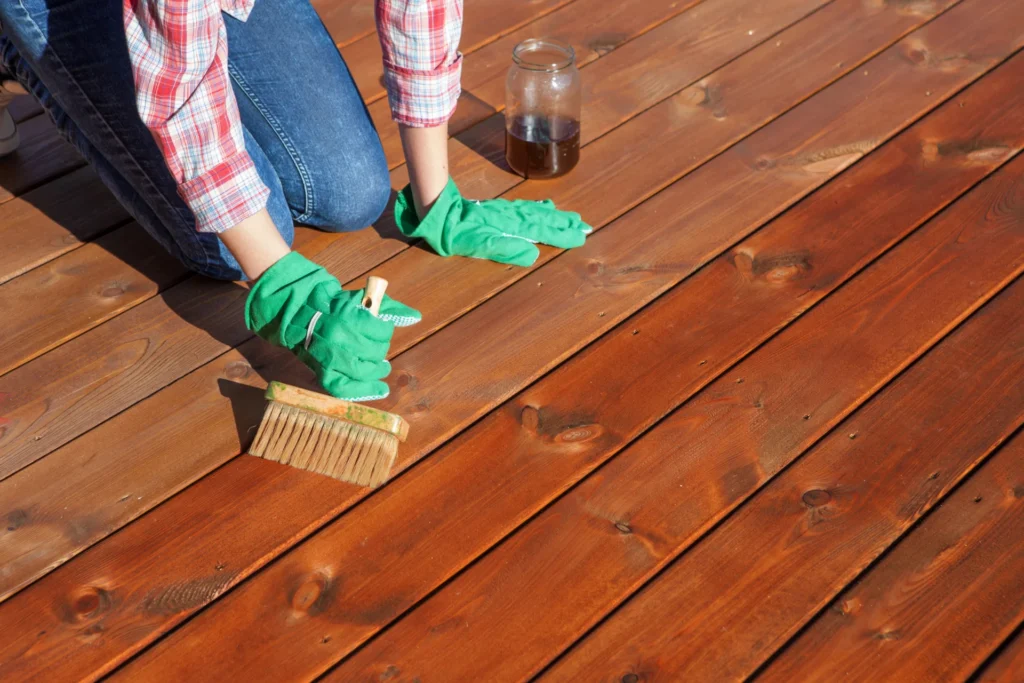
If your wood deck is due for maintenance, fall often provides ideal conditions for staining or sealing. Mild temperatures and lower humidity help finishes cure properly.
A quality stain or sealant helps repel moisture, prevent cracking, reduce fading from UV exposure, protect against freeze-thaw damage, and minimize warping and splitting.
Most wood decks benefit from resealing every two to three years, depending on the product used and local weather conditions. If water no longer beads on your deck, you could use a fresh coat.
6. Clean Between Deck Boards
Small gaps between deck boards allow water to drain away. When these spaces get clogged with leaves, dirt, or pine needles, moisture remains trapped, increasing the risk of rot or mold.
Use a putty knife or a specialized deck cleaning tool to remove compacted debris between boards before winter hits.
7. Trim Nearby Trees and Shrubs
Overhanging branches and bushes can drop leaves and create shade, leading to excess moisture on your deck. They can also break under the weight of heavy snow, possibly damaging railings or deck surfaces.
During fall deck maintenance, take time to trim vegetation to improve airflow, increase sunlight exposure, reduce debris accumulation, and prevent branch damage during winter storms.
8. Move and Clean Outdoor Furniture
Leaving patio furniture in one location for extended periods can cause staining and uneven weathering. Before winter arrives, store patio furniture away, or sweep and clean under tables and chairs, remove planters that trap moisture against the deck, and clean outdoor rugs, allowing the deck beneath them to dry completely.
Why Fall Deck Maintenance Matters
A little attention in the fall goes a long way toward preserving the beauty, safety, and durability of your deck. Regular seasonal maintenance helps prevent moisture damage, extends the life of the decking material, and reduces the likelihood of expensive repairs down the road.
If you notice signs of structural damage, widespread rot, loose railings, or aging deck boards, consider contacting a professional deck contractor for an inspection. With proper care each autumn, your deck can continue providing years of fun for the whole family.