Table of Contents

As winter draws nearer, you should consider winterizing your deck for the season. Snow, ice, freezing temperatures, and moisture can all take a toll on surface materials, railings, fasteners, and structural components. Whether you have a traditional wood deck or a low-maintenance composite deck, a few simple steps can help keep your outdoor living space in good condition throughout the winter.
The Importance of Winter Deck Maintenance
Winter weather poses several challenges for outdoor decks. Moisture can seep into wood and freeze, causing cracking or splitting. Snow and ice can accumulate on surfaces, putting pressure on joists, beams, and railings, and fluctuating temperatures can cause certain materials to expand and contract. Additionally, leaves, dirt, uncleaned debris, heavy planters, and outdoor rugs left on the deck can trap moisture and encourage staining, mold, or mildew.
Taking preventive measures before winter arrives helps reduce these risks and protects your deck from unnecessary wear.
How to Protect Your Deck From Winter Damage
Clean Your Deck in the Fall
When winterizing your deck, you first need to thoroughly clean it. Sweep away leaves, pine needles, twigs, dirt, and other debris, paying special attention to corners, areas around railings, and between deck boards where debris often blocks drainage or traps moisture.
If needed, wash your deck with an appropriate cleaner and a hose or the soft-wash setting on your pressure washer. Allow it to dry completely before applying any protective products.
A clean deck is less likely to develop persistent stains or moisture-related problems during the winter months.
Inspect Deck Boards, Railings, and Fasteners
Before winter arrives, take time to inspect your deck for signs of damage. Look for:
- Loose, cracked, warped, or splintered deck boards
- Loose railings, stairs, handrails
- Protruding nails or loose screws
- Soft spots or other signs of rot or moisture damage on wood decking
- Areas where water may collect instead of draining properly
By addressing these issues before snow and ice arrive, homeowners can prevent additional deterioration and improve safety.

Protect Wood Decks From Moisture
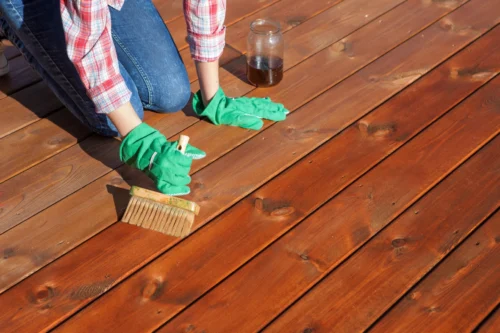
If you have a wood deck, it may benefit from a protective stain or water-repellent sealer, depending on its condition and previous treatment. These products help reduce moisture absorption and protect wood from weather exposure.
Before applying a product, make sure your deck is clean, dry, and ready for treatment. Follow the manufacturer’s recommendations for temperature, application conditions, and curing times, as some products may require warmer temperatures or dry weather to cure properly.
Composite decking generally doesn’t need sealing like wood decking, but it can still benefit from regular cleaning and inspections.
Remove Snow and Ice
When snow accumulates, use a plastic shovel rather than a metal one to reduce the risk of scratching or damaging the decking surface. Shovel in the direction of the deck boards to minimize surface stress.
Avoid using rock salt or harsh chemical deicers unless it’s approved for your deck. Some products can discolor, corrode, or damage decking materials and metal components. If ice forms, allow it to melt naturally or use sand or pet-safe ice melt. Avoid aggressively chipping it away.
Check Drainage and Under-Deck Areas
Proper drainage is critical during winter. Make sure gutters, downspouts, and nearby drainage systems direct water away from the deck and its supporting structures.
Remove debris from gaps between deck boards and inspect the area beneath the deck for standing water or drainage concerns. Good airflow and drainage help reduce moisture buildup, which can contribute to deterioration over time.
Store Outdoor Furniture and Accessories
Winterizing your deck should also include outdoor furniture and accessories. Store cushions, umbrellas, lightweight furniture, and decorative items in a safe, dry location. Cover grills and other heavy items with appropriate weather-resistant covers.
Avoid leaving heavy objects in areas where snow accumulation could add extra stress.

Work With a Professional Deck Builder
If your deck has significant structural concerns, damaged boards, loose railings, or signs of deterioration, you may want to have it inspected by a professional deck builder before winter arrives.
A professional can identify issues that may become more serious with prolonged exposure to snow, ice, and moisture.
Get Your Deck Ready for Spring
Winterizing your deck doesn’t require extensive effort. Cleaning regularly, scheduling timely repairs, and ensuring proper drainage and protection can all ensure your deck can handle winter weather.
By preparing your deck in the fall, you can reduce maintenance costs, protect its longevity, and enjoy a smoother transition into spring.